




With the Payment Automation module, the HORES system can be configured to automatically charge guests’ payment cards when predefined conditions are met.


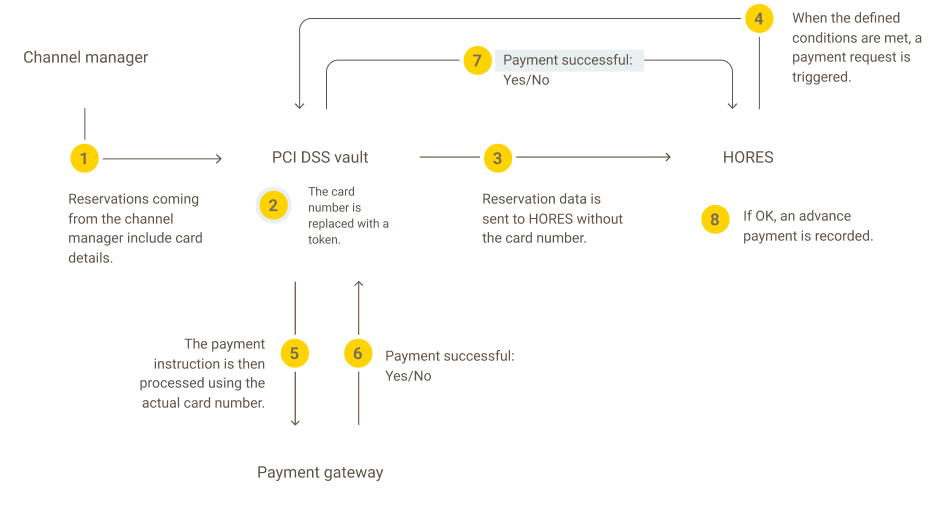
The entire system is built with maximum security in mind. HORES itself does not store payment card data; instead, it uses a third-party data vault with PCI DSS certification to manage it.


Rule setup
A key part of the system is the detailed configuration of payment rules. The payment trigger can be based on the booking source, rate plan, or cancellation policy, or a combination of these factors.
At the same time, the hotel defines when the payment should be processed—either immediately upon receiving the reservation, a set number of days before arrival, during the stay, or prior to departure. Payments can also be restricted by time of day or seasonally.

Reporting
The module provides a detailed overview of all completed and failed payment transactions. The list can be filtered and sorted by available parameters, and exported for further analysis. For failed transactions, the reason for the failure is always displayed.

Card display
Card numbers are stored in a separate data vault. However, they can still be conveniently displayed directly within the HORES interface. Such access is strictly tied to user account permissions and is recorded in the user activity log. Failed payment transactions can also be retried manually.
Process diagram

Extensive connectivity
The system offers more than 90 integrated payment gateways, including Adyen, Elavon, Stripe, and the Czech Global Payments Webpay. This enables direct integration with your bank account. The system also allows multiple payment gateways to be operated in parallel.

Why payment management is critical right now

More channels:
simpler payment management

More complex rules:
rate plans, reservation types, and conditions are easy to keep under control

Pressure for efficiency:
faster cash flow, fewer errors

Staff shortages:
less time for manual processes, more time for guests

